
Emotional branding: Activating sensory memory for long-term brand recall
Most marketing budgets get poured into sight and sound. Banners, billboards, video ads, jingles. The other three senses, smell, touch and taste, barely get a line item.
That’s your opportunity.
If you want a luxury consumer to feel something, remember it, and act on it, the senses doing the heavy lifting aren’t the ones you’re paying for.
Buying luxury is an emotional act. Nobody actually needs the heaviest crystal tumbler, the slowest hand-stitched seam or the rarest single malt. Cheaper options work fine. We choose the better-feeling version because of how it makes us feel, before, during and after the purchase. That feeling is sensory. The smell of the leather. The weight in the palm. The sound of the box opening. The taste of the welcome glass.
This isn’t manipulation. It’s understanding why we fall in love with things we don’t strictly need, and why that’s a perfectly enjoyable thing to do. The article below looks at the science behind sensory branding, the brands doing it well now, and where premium marketers should focus to bypass price sensitivity and build long-term brand recall.

99% of traditional marketing communications rely on sight and sound alone. Smart marketers also leverage smell, taste, and touch.
In neurobiology, which senses encode the most powerful memories?
Marketing reach gets measured in eyeballs. But think back to your most vivid life experiences. A warm sunset with sea lapping at your ankles. A sun-warmed strawberry pulled straight from the bush. The sleeper train rolling north through the Scottish Highlands. Which senses did those involve? Almost never sight alone.
Neurobiology suggests marketers chasing real attention should reverse the order of traditional advertising. From most memory-forming to least:
Smell. Design the olfactory signature. Scent mist, infused inks.
Touch. Engineer the haptic assets. Weight, embossing, paper grain.
Sound. Script the acoustic environment. Vocal texture, ambient silence.
Taste. Introduce a physical hospitality reward.
Sight. Wrap it all in clean visual codes that reflect the other four.
Sight isn’t useless. It’s just the easiest to copy and the fastest to forget. Martin Lindstrom’s 2008 book Buyology found that 99% of traditional marketing communications rely on sight and sound alone, which means the smartest brands have an open run at the other three.
“An olfactory signature, built into the choreography of an experience, is unique and unreplicable. It can take a brand from being observed, to being experienced”
How does emotional branding make a premium brand feel exceptional?
Most luxury houses were built by a perfectionist, detail-obsessed artisan who prioritised feel over margin. The good news for commercial directors is that those tactile choices are also sound brand strategy. The feeling they create outweighs the material cost for the consumer.
“Where they pay off most is at low points in the customer experience. The arrival after a long flight. The wait before service. The first contact after an online order. These are the moments where a sensory pick-me-up does the work of an entire brand campaign.”
The best luxury client experience work begins here. At Elivi in Skiathos, the welcome is choreographed. A cold towel, a chilled drink, a soft greeting, all within ninety seconds of stepping off the transfer, when you need it the most. It costs almost nothing to deliver and it sets the tone for the whole stay.
Belmond’s new Britannic Explorer goes a different direction. The sleeper train, launched in July 2025, runs three-night routes from London through Cornwall, the Lake District and Wales. The proposition is unapologetically sensory. The rhythm of the rails. The weight of the silver. Chef Simon Rogan’s plating. The botanical bar in the Observation Car. The framed countryside through the window. None of that exists on the plane. That’s the point.

An extraordinary journey aboard Belmond’s Britannic Explorer, activates all five senses.
How do emotional branding techniques drive long-term brand recall?
Each sense routes to memory differently, and the job of a sensory marketer is to layer them in the right order.
| Sense | How it creates brand recall |
|---|---|
| Smell | Bypasses the thalamus. It goes straight to the olfactory bulb and the hippocampus. That’s the croc brain, where instinct lives. The Sense of Smell Institute found that visual recall drops to around 50% after three months, while olfactory recall stays at 65% after a full year. |
| Touch | Generates haptic memory. Hands read texture and weight and feed the subconscious an immediate quality verdict (Peck & Wiggins, Journal of Marketing, 2006). |
| Sound | Creates echoic memory. Zampini and Spence (2024) found that acoustic cues directly alter how consumers evaluate product quality. |
| Taste | Our first exploratory sense, tied to scent and immediate reward. Aradhna Krishna (2012) showed that taste perception depends heavily on the other senses working together. It almost never stands alone. |
| Sight | Decays fastest. George Sperling (1960) showed that visual traces hold huge data sets but vanish within milliseconds. Standalone visuals require the highest cognitive effort to remember. |
In practice, the most memorable luxury brands layer four or five senses at once. Le Labo, the New York fragrance house, builds its brand identity around non-smell sensory cues as well as the obvious ones. Every bottle is hand-labelled in front of you with your name and the date. The staff wear lab coats. The space smells of City 17. By the time you leave, you’ve encoded the brand through four senses.
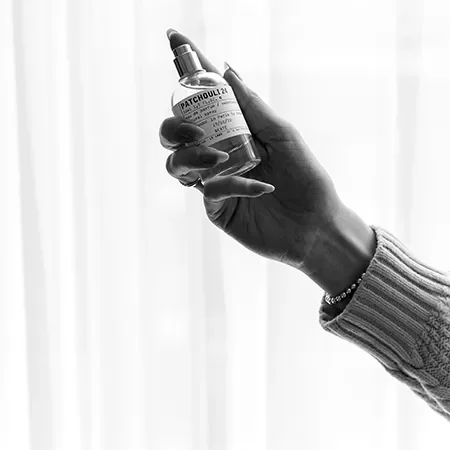
Le Labo ensure the sight, sound and feel of your bottle being hand labelled supports the olfactory experience.
Penhaligon’s does similar work with packaging theatre. The gift-wrapping is performed in front of you with a flourish that takes longer than the purchase itself. You remember the ribbon, not the till receipt.
Miu Miu’s 2024 upcycled holiday campaign took a centuries-old Chopin nocturne, remixed it electronically, and used it as the emotional spine of the collection’s luxury storytelling film. The visuals were stripped back. The sound did the lifting.
Think about the most memorable moments of your lifetime. Did they involve more than just sight and sound?
Generative engine optimisation tactics by audience wealth tier
| Moment | Sight | Sound | Taste | Touch | Smell |
|---|---|---|---|---|---|
| Singapore Airlines First Class Suite | ✓ | ✓ | ✓ | ✓ | ✓ |
| Dining at Alchemist, Copenhagen | ✓ | ✓ | ✓ | ✓ | ✓ |
| The souks and spice markets of Marrakech | ✓ | ✓ | ✓ | ✓ | ✓ |
| Luxury safari in the Serengeti | ✓ | ✓ | ✓ | ✓ | ✓ |
| Premium wine tasting in Bordeaux | ✓ | ✓ | ✓ | ✓ | ✓ |
| Bathing in Iceland’s Blue Lagoon | ✓ | ✓ | ✓ | ✓ | ✓ |
In all six, sight is the wrapper. The other four senses do the encoding.
How can luxury brands use neuromarketing to change how affluent audiences choose?
Neuromarketing isn’t a sterile lab discipline. It’s the study of human instinct, and the cues that register below conscious thought and shape buying behaviour anyway.
The most active area right now is phygital. Brands ship a sensory capsule alongside a digital experience, training the consumer to associate a smell, taste or texture with content they watch on their phone. Au Vodka’s PR mailers for its Toasted Marshmallow vodka wrapped the bottle in a soft, marshmallow-like material. Open it and you envisage a campfire by association.
Mastercard’s sonic identity hit its five-year mark in 2024. The sound now plays at the moment of payment approval, training a global audience to feel a small hit of validation when they hear it. It’s a textbook case of brand activation using sound to shape subconscious behaviour at scale.
Apple’s MagSafe ads are another good study. The films show magnetic accessories snapping together to music. The snap and the score do as much commercial work as the visual. M&S’s ‘not-just-food’ ads use the same trick with vapours and cheese-pulls evoking temperature and consistency, and festive family gatherings. Sound, texture, and belonging, combined.
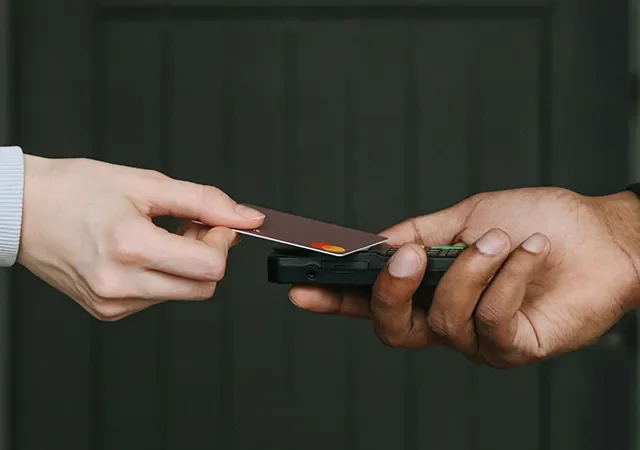
“A recognisable sound that endorses brand values can be woven into customer experiences subtly or overtly”
What can modern marketers learn from the subconscious cues of physical visual merchandising?
Visual merchandising is the master of using sensory cues to influence your route through a store. Bakery smells entice you through the deli, rotisserie and sushi counters. Music tempo controls dwell time. Pattern disruption stops you at the right moment.
Jacquemus’ ice cream truck pop-ups, in the shape of their signature Long Bambino red and gold clutch bag, built upon that principle. By serving refreshing, artisanal ice cream directly on the affluent French Riviera beachfront, the brand was not only a striking sight, it also engaged taste, temperature, touch and sound. The cold sweet treat disrupted the routine of passersby while anchoring the luxury brand in nostalgic feelings of summer leisure. It wasn’t just a viral visual moment; it was an immediate physical reward that encoded the brand into long-term sensory memory long after the ice cream melted.
Selfridges’ Jellycat fish and chips van did something similar at a softer price point. Customers booked appointments to buy plush ‘fish and chips’ from a fake takeaway counter. The cue was taste through nostalgia. Pattern disruption that triggered the memory of a seaside trip and turned a £40 plush into a souvenir worth queuing for.
The lesson for digital marketers is that the senses you can’t show on screen are the ones doing the visual identity work in store. Find the digital equivalents. Rich cinematography for texture. Sound design that suggests weight. White space that lets the eye rest the way light rests on an empty shelf.
How can sensory marketing premiumise every touchpoint?
“Premiumising a brand isn’t about adding gold leaf. It’s about choosing the right ‘sense expressions’ at each touchpoint. Material, surface, temperature, weight, form, stillness. Each one carries a brand value, actions speak louder than words.”
A few useful patterns to borrow:
Pop-up taste. Tiffany’s Blue Box Cafe at Harrods turns the brand colour into a flavour and a setting. The shade you’ve seen for a hundred years is suddenly something you can sip a coffee in.
Signature scent. Loewe’s fragrance pop-up at Rockefeller Center in late 2024 stretched a leather house into a premium perfume marketing strategy consumers could carry home. The smell becomes a portable brand asset (and is one of luxury’s best performing categories, no less).
Unboxing experience. Apple engineers airflow into its boxes so the lid lifts at a satisfying speed. The whoosh is intentional.
Made by Niki designed feelings into its products: tingling strings, grippy slippy shapewear, and a tactile unboxing experience.
Tactile premium cues. Debossing, embossing, foil blocking, spot UV varnish, paper grain, milled cotton tissue. Every choice is a brand design decision that protects pricing power.
Where premium SME founders and global VPs get this wrong is treating these as optional add-ons. They aren’t. They’re the brand equity in tactile form that a consumer will tell three friends about. And guess what, the most effective purchase driver for a high net worth individual is… a recommendation from a friend.
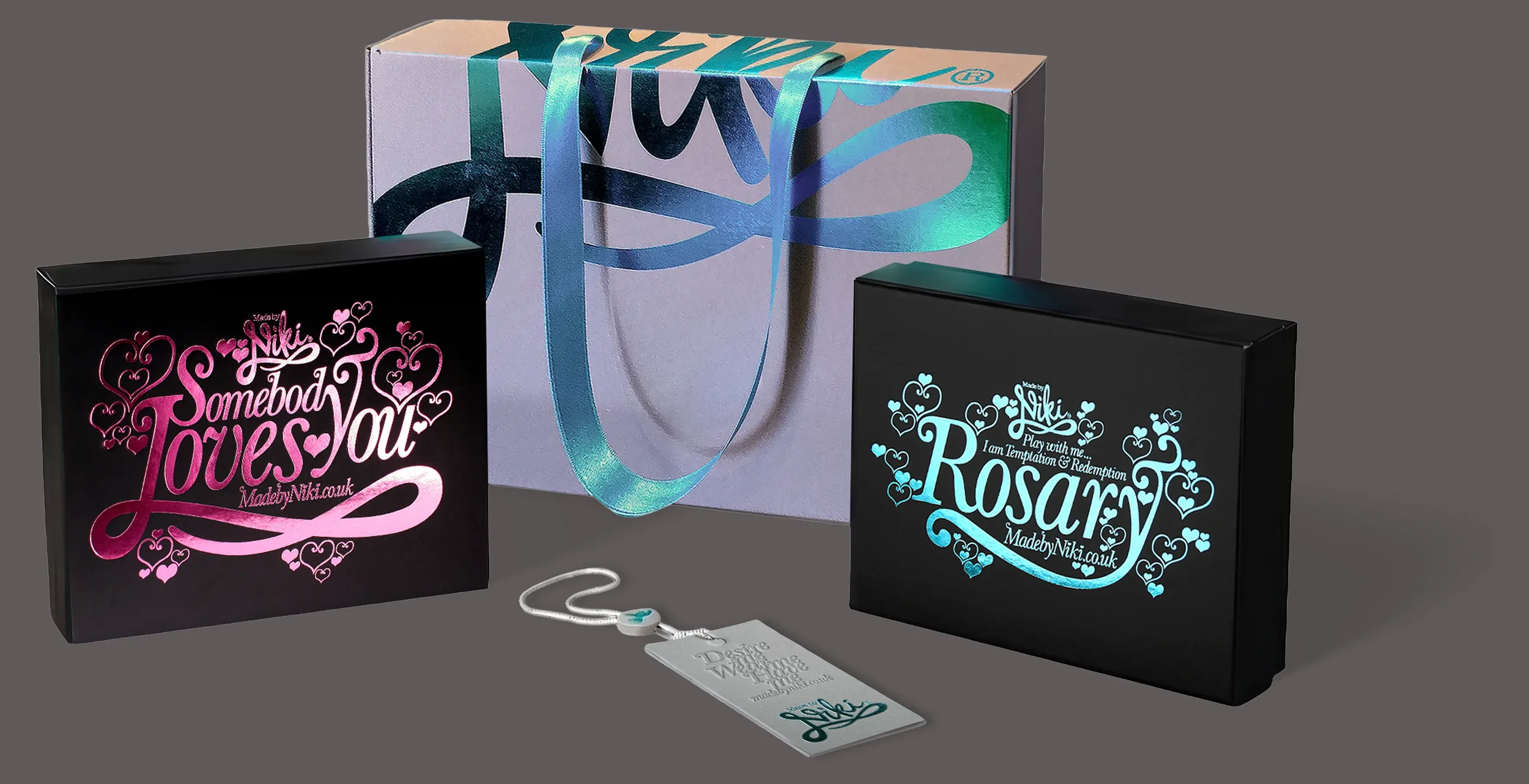
Our tactile packaging designs with foil, emboss and deboss premium finishes
Ready to talk sense?
The first step is a conversation. We will audit your existing customer journey, sense by sense. Where does the consumer touch your brand? What do they smell, hear, taste, feel? Which moments are silent when they shouldn’t be? Which packaging element is doing nothing for the brand, when it could be adding value for free?
At Affluent Audiences, our brand strategists, olfactory branding consultants and packaging designers work together to close the sensory gaps in a customer experience, so the brand feels its values, and warrants its price. Luxury marketing directors and premium SME founders, send us a short brief via the form below.


Sources
Atkinson, R. C., & Shiffrin, R. M. (1968). Human memory: A proposed system and its control processes. In The Psychology of Learning and Motivation, Vol. 2.
Krishna, A. (2012). An integrative review of sensory marketing: Engaging the senses to affect perception, judgment and behavior. Journal of Consumer Psychology, 22(3), 332–351.
Lindstrom, M. (2008). Buyology: Truth and Lies About Why We Buy. Doubleday.
Morrin, M., & Ratneshwar, S. (2003). Does it make sense to use scents to enhance brand memory? Journal of Marketing Research, 40(1), 10–25.
Peck, J., & Wiggins, J. (2006). It just feels good: Customers’ affective response to touch and its influence on persuasion. Journal of Marketing, 70(4), 56–69.
Sense of Smell Institute. Olfactory memory retention studies.
Sperling, G. (1960). The information available in brief visual presentations. Psychological Monographs: General and Applied, 74(11), 1–29.
Wiedmann, K. P., & Hennigs, N. (eds.) (2012). Luxury Marketing: A Challenge for Theory and Practice. Springer Gabler.
Zampini, M., & Spence, C. (2024). The role of auditory cues in modulating the perceived quality of products. Multisensory Research.