
Consumer psychology: How traits evolve as net worth rises
Consumer psychology shows that a mass affluent buyer thinks differently to a billionaire, and it manifests in language, emotional register and what motivates them to buy.
We analysed psychometric profiles across five wealth tiers to map how, then turned the findings into a consumer psychology playbook for luxury brand marketers. Six brand examples and the full evidence can be found in the downloadable whitepaper.
Originally written on 3rd February 2025. Niki McMorrough updated this consumer psychology guide with more practical tips from the whitepaper in May 2026.
The consumer psychology playbook for luxury brand marketers — built on Big Five evidence across the full wealth spectrum.
How does consumer psychology change as wealth grows?
It’s often said that wealth changes people. Rarely do we have proper consumer psychology evidence to show how. Affluent Audiences analysed psychometric profiles across five wealth tiers — from mass affluent ($100K–$1M) to billionaire ($1B+) — to map exactly how communication, emotional stability and motivation shift as net worth rises.
Consumer psychology indicators across the wealth spectrum
| Strategic indicator | Research insight |
|---|---|
| Communication style | Billionaires prioritise Clout (86.03) and Power over Authenticity |
| Emotional Profile | Wealth correlates with high emotional stability and resilience |
| Social Affiliation | Billionaires seek higher connection (72.69) than mass affluent |
| Primary Driver | Motivation shifts from recognition to self-direction |
These patterns have direct consequences for how luxury brands talk to, sell to, and retain their highest-value buyers. This article contains tips from the practical playbook. The full evidence — Big Five scores by tier, Schwartz values mapping, billionaire profiles, the Receptiviti psycholinguistic data — can be downloaded as part of the full whitepaper.
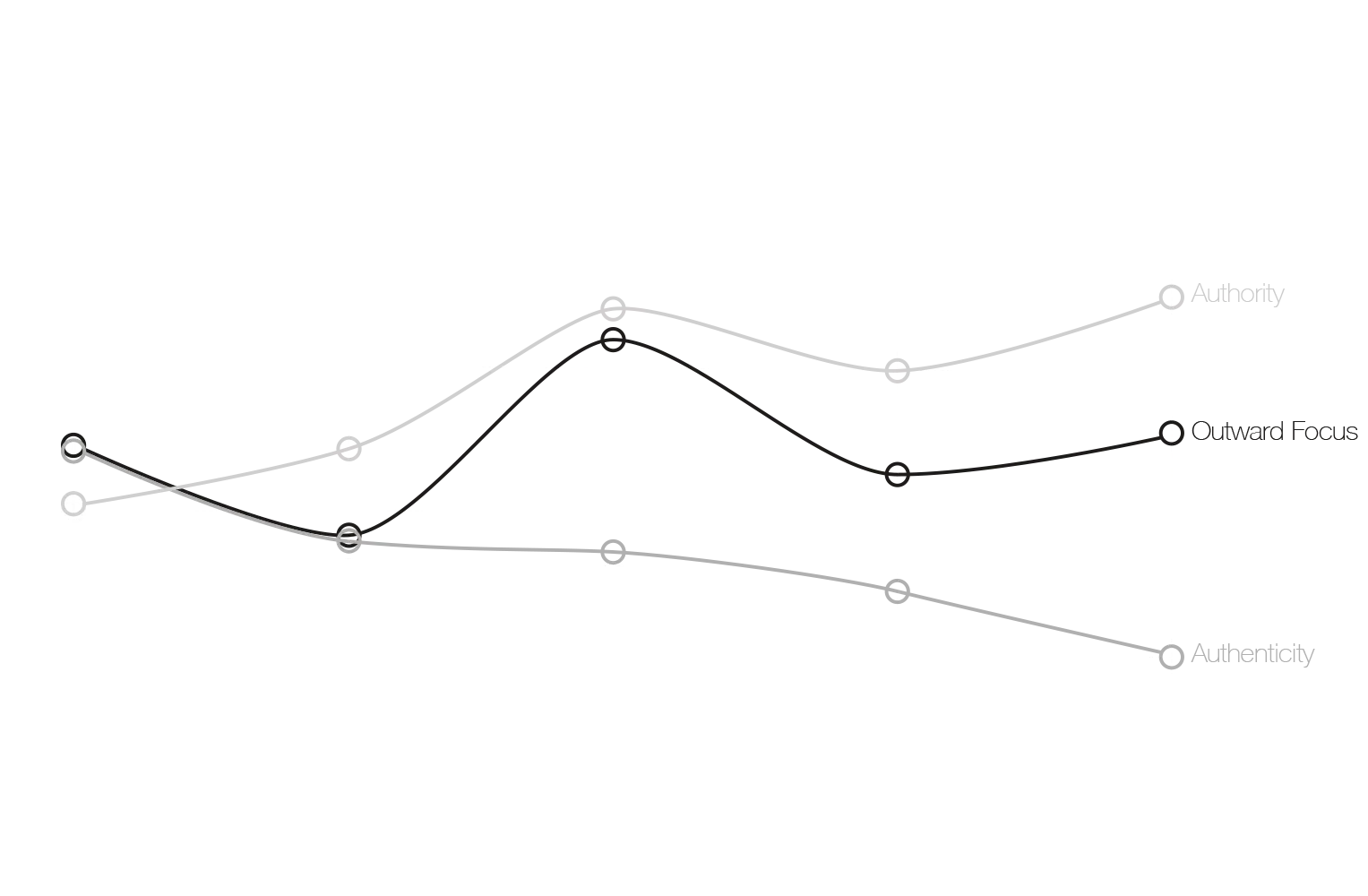
How should luxury brands talk to billionaires versus HNW audiences?
Billionaires score high on clout and power, but low on authenticity. HNW audiences sit much closer to the middle for both. As wealth rises, language gets more deliberate and less spontaneous.
What this means in practice:
— For billionaire and UHNW segments, write with authority. Strategic, controlled, declarative. The Rolex ambassador playbook — accomplished people speaking with quiet certainty — is the template.
— For HNW and very-high-net-worth segments, you have more room. Hermès’ “petit h” line repurposes production scraps into one-of-a-kind pieces — a calibrated authenticity that signals craft without breaking exclusivity. That works at $1M–$30M; it lands less well at $1B+.
— For mass affluent, lead with warmth and accessibility as authenticity is a little above average. Confessional founder stories, behind-the-scenes content, community language all work harder than they would two tiers up.
What kind of marketing works on emotionally stable buyers?
Neuroticism falls steadily as net worth rises. Billionaires show much higher resilience than mass affluent individuals. This aligns with Columbia Business School research showing emotional stability is critical to both wealth accumulation and retention.
What this means in practice:
— Drop the urgency tactics for high-tier audiences. Countdown timers, fear-of-missing-out, scarcity-by-deadline — these prey on neuroticism. They underperform at HNW and above because the audience simply doesn’t feel the same emotional spike.
— Lead with mastery, longevity and weathered competence. ‘We’ve done this for fifty years’ beats ‘only 12 left’ at the top of the spectrum.
— In creative direction, calm and considered visual language outperforms high-contrast, high-energy treatments for these segments. Compare a Patek Philippe campaign to a flash-sale email — different psychology, different visual register.
Why exclusive community beats exclusive product at the top of the spectrum
The ‘lonely at the top’ cliché doesn’t hold. On social affiliation, Billionaires score high and Mass affluent individuals score low. The desire for connection nearly doubles as you climb the wealth ladder, while inward focus drops sharply.
What this means in practice:
— Stop selling exclusive products. Start building exclusive communities around them. The Four Seasons private-jet world tour works because it’s not a hotel stay — it’s a closed group of people who’ll remember each other’s preferences a decade later.
— Loyalty programmes for HNW and above should reward access and introduction, not points and discounts. The asset they want isn’t a free upgrade. It’s the connections.
— Brand events that put owners in a room together (collector dinners, launch previews, auctions) outperform broadcast media at the top tier — because they meet the true psychological need.

Exclusive community beats exclusive product for UHNW and Billionaires
Legacy versus reward: matching message to motivation by tier
Achievement drive peaks at HNW and stays high through UHNW, then moderates at billionaire as focus shifts toward legacy and impact. Reward drive — short-term gratification — drops as wealth rises. Schwartz’s Theory of Basic Human Values predicts exactly this: when fundamental needs are met, value priorities shift from security and reward toward self-direction and universalism.
What this means in practice:
— For mass affluent and HNW, reward-led messaging still works. Status, achievement, the upgrade. ‘You’ve earned it’ is a legitimate hook.
— For UHNW and billionaire segments, lead with legacy. Patek Philippe’s ‘you never actually own a Patek Philippe, you merely look after it for the next generation’ reads exactly that pattern — and it’s been running for thirty years because it works.
— Brand purpose, philanthropy and intergenerational continuity aren’t soft positioning at the top. They’re the primary psychological match.
Mass Affluent and HNW audiences value recognition and reward — achievement status signals.
A consumer psychology playbook for luxury brand marketers
Pulling it together, here’s how our strategy team translated the four findings into a marketing operating system across the wealth spectrum.
| Tier | Voice register | Emotional driver | Loyalty driver | Headline message type |
|---|---|---|---|---|
| Mass Affluent | Warm, accessible, confessional | Reward, achievement | Points, status | “You’ve earned this” | HNW | Considered, expert | Achievement, mastery | Recognition, upgrades | “Mastery takes time” |
| VHNW | Strategic, curated | Mastery, legacy beginning | Access, introduction | “Built to last” |
| UHNW | Authoritative, controlled | Legacy, impact | Community, peer access | “For the next generation” |
| Billionaire | Declarative, deliberate | Legacy, universalism | Closed circles, peer mirroring | “Custodianship” |
A brand serving multiple tiers needs at least three voices. If you’re wondering why conversion lags from one of your segments, the fix isn’t more spend. It’s a tier-matched language review.
Access the full ‘Wealth and Personality’ whitepaper
Complete the form below to access the full report:
| What the whitepaper covers |
|---|
| 80+ traits from the psycholinguistic framework |
| Big Five and Schwartz values broken out by wealth tier |
| Psychographic profiles for Mark Zuckerberg, Bill Gates, Alice Walton, Mukesh Ambani and Pierre Omidyar |
| Luxury brand case studies — Rolex, Hermès, Louis Vuitton, Chanel, Four Seasons and Patek Philippe — analysed against the data. |
Take the next step: audit your marketing across wealth tiers
Affluent Audiences is a full-service marketing and creative agency for premium and luxury brands. If your messaging is out of sync with consumer psychology, let’s finesse it.


Research Sources & Academic Citations
Freiberg, S., & Matz, S. (2019):In Startups, Founder Personalities Matter as Much as VCs. Research Brief via Columbia Business School.
Schwartz, S. H. (2012):An Overview of the Schwartz Theory of Basic Values. Online Readings in Psychology and Culture.
Markowitz, D. M., et al. (2023):Authentic First Impressions Relate to Interpersonal, Social, and Entrepreneurial Success. Social Psychological and Personality Science.